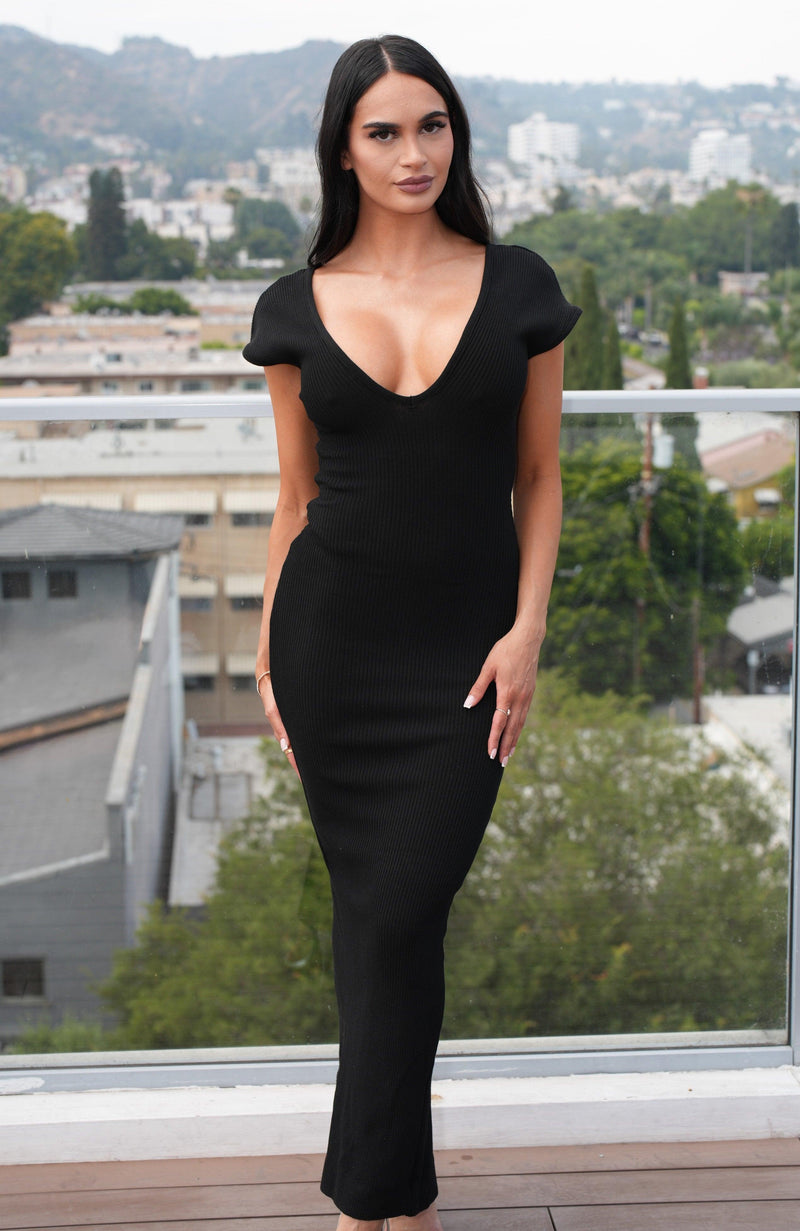


A statement look is built around one focal point, not three. Pick the single element doing the talking, color, silhouette, print, or skin, then deliberately quiet everything else. The most common reason an outfit reads loud instead of bold is that three pieces are competing for the same job.
What makes a look a statement instead of just loud?
Intent. A statement look has a clear subject and a supporting cast. A loud outfit has four subjects and no supporting cast. If someone described your outfit in one short sentence and had to leave something out, you would feel it. If they need three clauses, you have three focal points and no statement.
The practical test before you leave: name the piece. If you cannot say in four words what the outfit is about, strip something out.
How do you pick the focal point?
There are only four levers worth pulling, and you pull one:
• Color. A single saturated piece against neutral everything. Neon, hot pink, or coral does the work by itself. See the Bianca One Shoulder Dress in neon.
• Print. One patterned piece, nothing else patterned. Leopard and abstract prints are loudest, so they need the most silence around them. The Fiona Leopard Jumpsuit and the Lala Maxi Dress both work this way.
• Silhouette. Shape as the story: an exaggerated wide leg, a one-shoulder asymmetry, a floor-length column. The Sophia Jumpsuit in black is entirely silhouette, which is why it survives in black.
• Skin. One deliberate opening, framed. A back, a waist cutout, a plunge. Not all three. The Elena Dress puts it at the back and the leg, and stays closed everywhere else.
Pick the lever that fits the room you are walking into, not the one that is most extreme.
What should the rest of the outfit do?
Get out of the way, on purpose. Supporting pieces should be solid, neutral, and simply cut. That is not a downgrade, it is the mechanism. Contrast is what makes the focal point legible.
• Shoes match the hem, not the top. A cropped pant takes a heel that lengthens the leg; a maxi can carry a heavier shoe because nobody sees it.
• Jewelry gets one position. If the neckline is the story, the neck stays bare and you move metal to ears or wrist.
• Bag stays small and structural. A large bag competes for silhouette, which is a focal point you did not choose.
• Hair and makeup pick one too. A strong lip or a strong eye. Both plus a strong dress is the same mistake in a different medium.
Why does fit matter more than the piece itself?
Fit is the entire difference between bold and costume. A statement piece that does not fit reads as an attempt, and people register it as effort rather than confidence. Everything else on this page is styling theory. This part is mechanical.
Check the three points that actually fail: the hip on anything fitted, the torso length on a jumpsuit, and the ribcage on anything strapless. Rise and torso length cannot be tailored meaningfully. Hems and straps can. Sit down in it before you decide, because most fit problems only appear in that transition, not standing at a mirror.
Fabric with real stretch recovery holds its shape through a full night. Fabric without it looks correct at 8pm and defeated by midnight.
How do you build a statement look for a specific night?
The room sets the lever. Same principle, different execution:
• Club or dancing. Silhouette or skin, never a delicate print. You need something that moves and recovers. A fitted mini or a one-piece beats anything you have to keep adjusting.
• Dinner. Color or neckline. You will be seated and viewed from the waist up for two hours, so put the focal point above the table. A cowl or plunge, like the Katrina Cowl Neck Maxi Dress, is built for exactly that.
• Rooftop or outdoor. Plan for a temperature drop and a hard floor. Layer over, never under, so the silhouette survives the jacket.
• Your birthday. This is the one night to go a lever louder than usual. Bright, unmissable color or a genuinely dramatic neckline. See birthday outfits.
• Wedding or formal. Silhouette does the work and the dress code sets the ceiling. A two-piece set often reads more considered than a dress and is easier to adjust across a long event.
What are the most common mistakes?
• Three focal points. Print plus cutout plus statement shoe. Each one cancels the others.
• Matching the accent color. Matching your shoe to your dress color splits attention across two places instead of concentrating it in one.
• Confusing exposure with boldness. More skin is not more statement. One framed opening reads as deliberate; several read as unplanned.
• Dressing for the photo, not the night. If you cannot stand, sit, and move in it for six hours, it is a costume with a short run time.
• Buying the piece without checking the fabric. Stretch recovery is the difference between a piece you rewear and a piece you wore once.
What if bold does not feel like you?
Start with silhouette rather than color or skin. A sharply cut black piece is a statement, and it is the least exposed version of one. Structure reads as confidence without asking you to be bright or bare. Once that feels normal, add a second lever on a night that earns it.
The short version
One focal point. Everything else solid, simple, and quiet. Fit checked sitting down, not standing. Fabric that recovers. Match the lever to the room. If you can name the outfit in four words, it is working.
Shop Going Out Dresses, Jumpsuits & Rompers, and Two-Piece Sets. Related reading: What Is Dark Feminine Fashion?, The Cutout Dress Guide, and What Jewelry to Wear With a Cutout Dress.