They said "I'll pick you up at 7" and nothing else. Not the neighborhood, not the vibe, not whether you'll need a coat check or a bar stool. Maybe it's a surprise on purpose. Maybe they just didn't think to say. Either way, you're getting dressed for a night you can't picture yet, and the usual approach, dress for the venue, doesn't work when there's no venue to dress for.
So you dress for the range instead. Not the safest possible outfit, and not the boldest. Something built to be right whether the reservation is a taco counter or a tasting menu, because you won't find out which until you're already in the car.
Four outfits below, each one picked for how far it can stretch, not for how it looks standing still in your bedroom.
Dress for the range, not the guess
| What you know | What you don't | What you wear |
|---|---|---|
| It's dinner | Neighborhood spot or somewhere with a wine list | Gabriella Dress, Tan |
| "Dress a little nice" | How nice is "a little" | Serena Skirt Set, Green |
| It's somewhere they've been wanting to take you | Whether that means fancy or just meaningful | Camilla Long Maxi Dress, Black |
| Nothing, honestly | Everything else | Isabella One Shoulder Pant Set, Grey |
1. You know it's dinner. You don't know what kind.

This is the most common version of the mystery date. You know there's a table involved. You don't know if it's a four-top with a laminated menu or a reservation they made two weeks ago. Overdress for the first and you're the loudest thing in the room. Underdress for the second and you spend the meal aware of it.
A dress with real detail but no single loud signal splits the difference. The Gabriella Dress in Tan has the cut-out and tie-front to read as considered, and a thigh-high slit that adds edge without turning into a statement piece. Tan is the other half of the argument: it's warmer and more forgiving than black under casual lighting, and it holds its own under anything more polished too, since it reads as a color choice, not a compromise.
It also survives the walk there. Whatever the venue turns out to be, you got there in a maxi dress that looked like a decision, not a guess.
Why it works: detail without a single loud element reads as intentional at a diner and at a table with a wine list. Neither venue makes you look like you got it wrong.
2. They said "dress a little nice." That's it. That's the brief.

"A little nice" is not an instruction, it's a Rorschach test. To one person it means real pants. To another it means an actual outfit. You cannot solve for what they meant. You can solve for something that adjusts after the fact, which is the whole advantage of a set over a dress.
The Serena Skirt Set in Green gives you that adjustment without a second trip to your closet. Strapless twist-knot top, ruched midi skirt, a color with enough presence to count as dressed up on its own. Turn up the jewelry and the heel height and it reads as the effort version. Keep both minimal, a single gold cuff, a low sandal, and the same set reads as put-together-casual instead of overdone. You're not changing the outfit. You're changing what's around it.
Green is doing real work here too. It reads as considered rather than safe, which matters when "nice" is the only note you got.
Fit note: strapless lives or dies on fit, and no undergarment is included, so plan that layer and check the twist-knot with your arms raised before you leave, not once you're seated.
3. "I've wanted to take you here." No other details offered.

This is the line that means the most and tells you the least. "Somewhere I've wanted to take you" could be a restaurant they've been saving for the right night, or it could be the bar where they had their first job, meaningful for reasons that have nothing to do with the tablecloths. You genuinely cannot predict the formality from the sentiment. People are sentimental about all kinds of rooms.
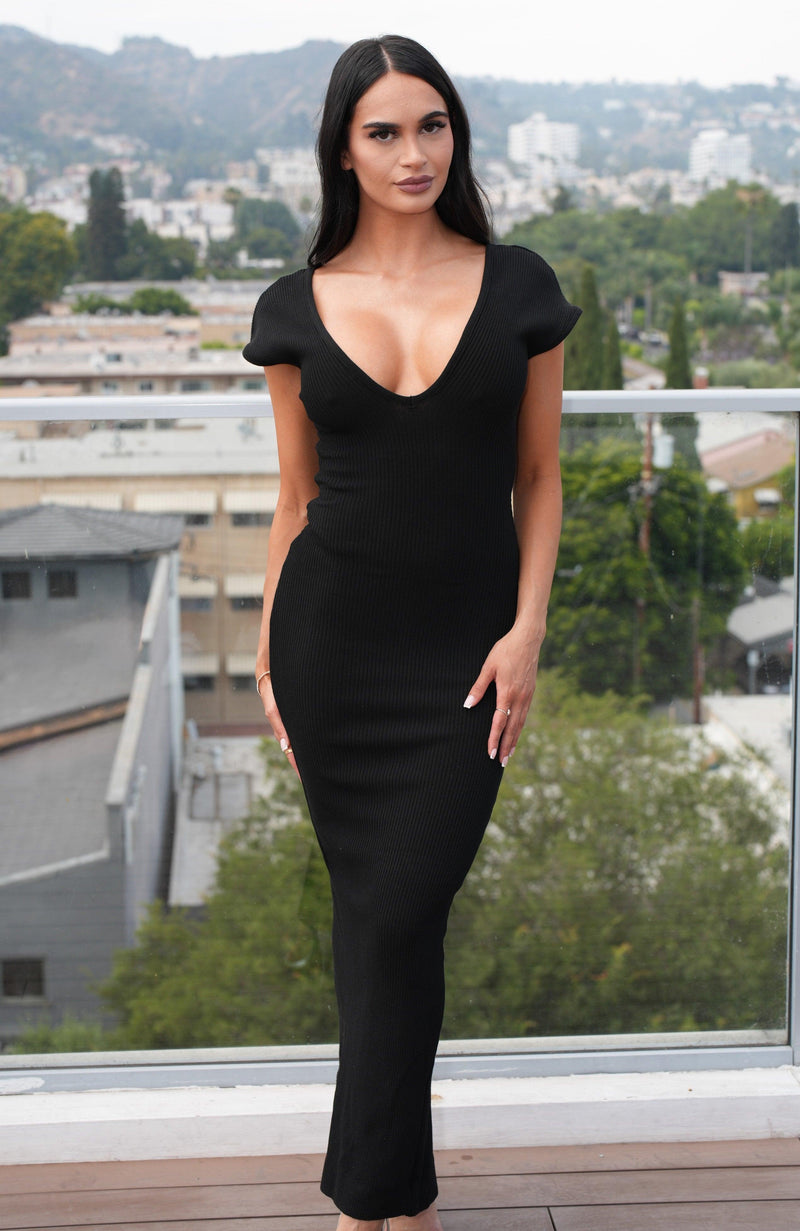
What you can do is show up in something that would be correct at either. The Camilla Long Maxi Dress in Black is built past the casual end already, lace overlay, a ruched back, a fully lined fit with real structure, so it never reads as underdressed. But black and a clean floor-length line don't read as costume-formal either. It's the rare piece that's dressed up without announcing it, which is exactly what a night you can't categorize calls for.
It's also the dress you want on your body in a photo you didn't know was being taken, the one they text you afterward saying this is the place. That happens more on this kind of date than any other.
Why it works: a dress that's already dressed up doesn't have a casual failure mode. It can only read as more than the room requires, never less.
4. You have no information. None. They wouldn't even confirm a time zone.

Some dates are planned entirely to be a surprise, which means the actual plan could be a bar crawl, a drive somewhere, or three stops you weren't told about in advance. A dress is a bet on staying upright and mostly stationary. When you don't even know that much, pants are the safer wager.
The Isabella One Shoulder Pant Set in Grey is built for exactly this uncertainty. High-waisted pants move with you through however many stops the night turns out to have, and grey is the one going-out neutral that doesn't commit to a mood the way black or a bright color does, it reads dressed up next to a bar rail and completely at ease walking six blocks between places. The one-shoulder top with the zipper detail is the single structural element that keeps the whole thing from reading as separates you grabbed at random.
If the night turns out to be one location the whole time, you haven't overdressed. If it turns out to be four, you're still comfortable in the fourth one.
Why it works: pants are the only silhouette with no bad outcome across an unknown number of stops. A dress is betting on one venue. This isn't betting on anything.
The rule when you have no rule to follow
You can't dress for a venue you haven't been told. What you can dress for is the version of the night that's most likely to happen, and hedge from there. That means picking pieces with detail instead of pieces with a single loud statement, because detail reads as effort at any register, and a statement only reads correctly in the one setting it was built for.
It also means asking one question before you spiral over the group chat: are you sitting the whole time, or is there a decent chance you're moving? That answer alone tells you dress or pants faster than any amount of guessing at the restaurant.
The mystery is the point of the date. It doesn't have to be the point of getting dressed for it.